

Ted Britt Ford of Chantilly

Business Tax Benefits · Section 179

Put Section 179 to Work on Your Next Ford Truck or Van

Chantilly-area businesses investing in qualifying Ford trucks and commercial vans before January 1, 2026 may be able to deduct a significant portion of the purchase price in the same tax year. Ted Britt Chantilly Ford's commercial team is ready to help you find the right work vehicle—and make the most of your investment.

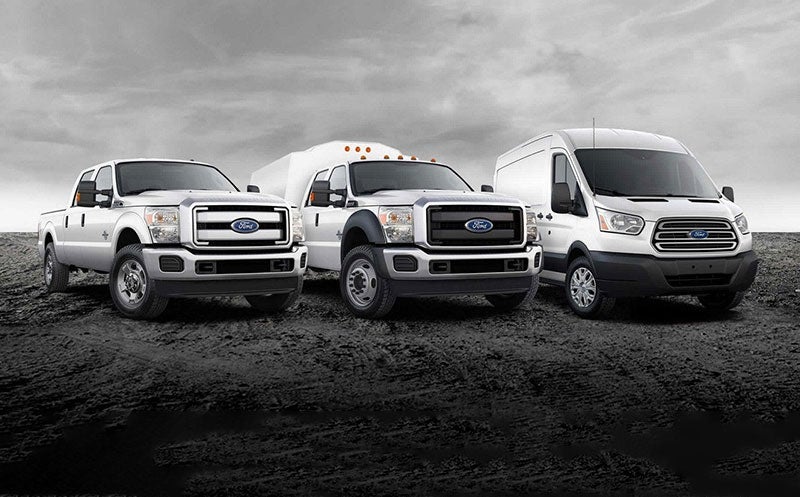
Ford Super Duty trucks and commercial van at Ted Britt Chantilly
Overview

Understanding Section 179 for Business Vehicle Purchases in 2025

IRS Section 179 gives qualifying businesses the ability to deduct the full purchase price of eligible work vehicles in the year they are placed in service—rather than writing them off gradually over many years. For the 2025 tax year, a qualifying Ford truck or commercial van must be purchased and actively placed in business use before January 1, 2026. When your vehicle meets the Gross Vehicle Weight Rating (GVWR) and business-use requirements, Section 179 can convert your Ford purchase into a meaningful, same-year tax deduction.

The Core Benefit

Deduct the Full Cost in Year One

Instead of recovering the cost of a qualifying vehicle over five or six years of standard depreciation, Section 179 lets eligible businesses expense that cost immediately. For Loudoun County, Fairfax County, and greater NoVA business owners, this can translate into a substantial reduction in taxable income during the year of purchase.

Business Use Requirement

Vehicle Must Be Used Primarily for Business

Section 179 requires that the vehicle be used for business purposes more than 50% of the time. Keeping a complete mileage log that distinguishes business trips from personal use is strongly recommended—and essential if the IRS ever reviews your deduction.

Annual Limits & Deadlines

2025 Limits: $1,080,000 Overall / $30,500 Per Vehicle

For the 2025 tax year, businesses may deduct up to $1,080,000 across all qualifying Section 179 purchases. For eligible vehicles with a GVWR exceeding 6,000 pounds, the per-vehicle Section 179 cap is $30,500, subject to IRS guidelines. The vehicle must be in service before January 1, 2026 to apply to the 2025 tax year.

Sample Scenarios

Estimated First-Year Deductions on Popular Ford Work Vehicles

The table below illustrates how Section 179 and potential bonus depreciation under Section 168(k) could combine on common Ford commercial vehicles for the 2025 tax year. Qualifying vehicles with a GVWR over 6,000 pounds may be eligible for a Section 179 deduction up to $30,500 per vehicle, with the overall Section 179 limit set at $1,080,000. Exact figures depend on the specific vehicle, purchase price, business-use percentage, and current IRS regulations.

Example Vehicle Purchase Price Section 179 Deduction (Max $30,500) Sample Bonus Depreciation (Sec. 168(k)) Estimated Total 1st-Year Deduction
Ford F-250 Super Duty $78,000 $30,500 $32,760 $63,260
Ford F-350 Super Duty $86,500 $30,500 $36,330 $66,830
Ford Expedition $74,000 $30,500 $26,880 $57,380
Ford Transit 350 $68,500 $30,500 $23,940 $54,440

These figures are illustrative only and assume business use exceeding 50%. Your actual deduction will depend on IRS regulations in effect at time of filing, the vehicle's confirmed GVWR, and your specific business-use percentage. Consult your CPA or tax advisor before making any filing decisions.

Beyond the tax benefit, front-loading your deduction improves cash flow in the year of purchase—freeing up capital that Chantilly and Loudoun County businesses can reinvest in equipment, staffing, or operations while driving a capable, hard-working Ford on every job.

Eligible Vehicles

Which Ford Models Are Eligible for Section 179 in 2025?

A vehicle's eligibility for favorable Section 179 treatment hinges primarily on its Gross Vehicle Weight Rating (GVWR) and the percentage of time it is driven for business. Ford's commercial lineup offers several models engineered to meet the heavy-vehicle threshold that unlocks larger deductions.

Heavy-Duty Ford Models Commonly Eligible

Ford vehicles built around commercial-grade platforms—including select F-150 (properly configured), F-250 Super Duty, F-350 Super Duty, Expedition, and Transit 250/350 models—frequently carry a GVWR above 6,000 pounds. These trucks and vans are engineered for the real-world demands of contractors, service fleets, and delivery operations across the Northern Virginia corridor.

When predominantly used for business, these models can combine a Section 179 deduction (up to $30,500 for 2025) with potential bonus depreciation under Section 168(k). The commercial team at Ted Britt Chantilly Ford can verify GVWR on any specific build you're considering and help you align your selection with your tax planning goals.

Light-Duty & Crossover Models

Vehicles such as the Ranger, Maverick, Explorer, and Escape typically have GVWRs below the 6,000-pound threshold. They remain strong options for personal and mixed-use purposes, but are generally treated as standard passenger vehicles for federal depreciation rules.

Business owners who want to maximize their Section 179 benefit most often look to Ford's heavier commercial platforms. That said, your tax professional can advise on whether any vehicle in your fleet—regardless of weight class—may offer deduction opportunities suited to your situation.

Act Before Year-End

Steps to Claim Section 179 on a 2025 Ford Purchase

To apply Section 179 to your 2025 tax return, your qualifying Ford must be purchased and placed into active business use before January 1, 2026. Because IRS limits and bonus depreciation percentages can shift year to year, acting early protects both your inventory choice and your timeline.

  1. 1
    Consult Your CPA or Tax Advisor First

    Before visiting the dealership, sit down with your accountant to review your projected taxable income, anticipated business mileage, and which Ford models best align with your deduction strategy. This conversation shapes everything that follows.

  2. 2
    Work with Ted Britt Chantilly Ford's Commercial Team

    Our fleet and commercial specialists will help you identify the right F-250, F-350, Expedition, or Transit configuration, confirm GVWR, review available inventory, and build a purchase timeline that keeps you ahead of the December 31 deadline.

  3. 3
    Finalize Purchase and Take Delivery

    Ordering early helps you avoid the inventory pressure that builds in the fourth quarter. Once you take delivery and put the vehicle into business service, the clock for your Section 179 deduction starts for the 2025 tax year.

  4. 4
    Build a Paper Trail for Tax Filing

    Retain all purchase and financing documents and maintain a detailed mileage log from day one. Clearly recording business versus personal trips will substantiate your deduction and simplify the process when your tax professional prepares your return.

Get Started

Connect with Ted Britt Chantilly Ford's Commercial Team Today

Interested in exploring how a new Ford Super Duty, Expedition, or Transit could support your business and potentially qualify for a Section 179 deduction? Contact Ted Britt Chantilly Ford or stop by our Chantilly showroom to browse eligible models and speak with our commercial specialists in person.

Our commercial and fleet sales team understands what businesses in the Dulles Technology Corridor, Route 28 corridor, and broader Loudoun–Fairfax region need from a work vehicle—and from the dealership that sells it. From helping you pinpoint the right configuration and verifying GVWR, to coordinating documentation for your tax professional, we make the process clear and efficient.

Year-end deadlines create real urgency, but the value of a well-chosen Ford work truck extends well beyond this tax season. Secure your qualifying vehicle now and benefit from the capability, reliability, and resale value that have made the Ford Super Duty America's most trusted work truck for decades—built for business, engineered to perform.

Common Questions

Section 179 Questions from Chantilly-Area Business Owners

Below are answers to questions our commercial customers frequently ask about Section 179 and Ford vehicles. Use these as a starting point, then speak with your tax professional and our team for guidance specific to your situation.

Ford vehicles with a GVWR above 6,000 pounds are generally eligible for larger Section 179 deductions when used primarily for business. Common qualifying models include the F-250 Super Duty, F-350 Super Duty, Expedition, and Transit 250/350 in specific configurations. Eligibility also depends on your business-use percentage and the IRS rules in effect for the tax year.

For the 2025 tax year, the per-vehicle Section 179 deduction limit for qualifying vehicles with a GVWR over 6,000 pounds is $30,500, subject to IRS rules. The total Section 179 deduction across all qualifying purchases may not exceed $1,080,000 for 2025.

Section 179 typically applies to vehicles that are purchased outright or financed, not to conventional operating leases. Certain lease-to-own structures may qualify depending on how the agreement is written. We recommend discussing your preferred acquisition method with your tax advisor before finalizing the transaction.

Yes—certain F-150 builds with higher payload packages can exceed the 6,000-pound GVWR threshold and may qualify. Whether a specific F-150 configuration crosses that line depends on the trim level, cab style, and options selected. Our commercial team at Ted Britt Chantilly Ford can confirm the exact GVWR for any truck you're evaluating before you purchase.

At minimum, you should retain your purchase or financing agreement, documentation confirming the vehicle was placed in service before December 31, and a mileage log that clearly separates business from personal use throughout the year. Your tax professional can outline additional recordkeeping requirements based on your specific business structure and filing situation.

The information on this page is provided for general educational purposes and does not constitute tax, legal, or accounting advice. Vehicle eligibility, deduction limits, GVWR thresholds, and bonus depreciation rules are governed by IRS regulations and are subject to change. Section 179 benefits vary based on your business-use percentage, total qualifying purchases, and overall tax situation. Always consult a qualified tax professional before claiming any Section 179 or bonus depreciation deduction. Ted Britt Chantilly Ford is not a tax advisory firm.

Cookie Consent: By continuing to use this site you agree to our use of cookies.

Accept Learn More